Menu

I Am Quixote

Call Us At: 919-995-9763

El Quixote Festival Events

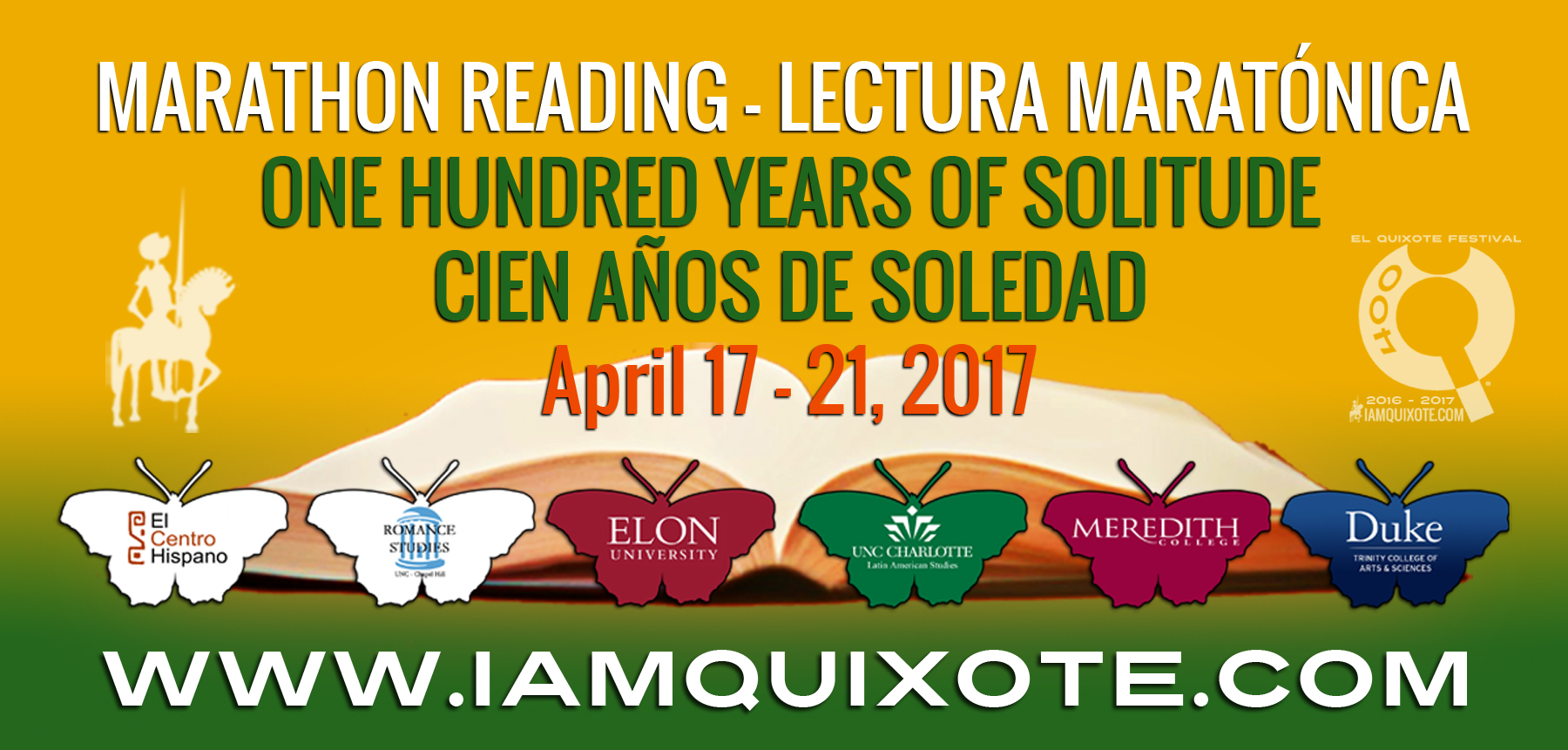
100 Years of Solitude MARATHON READING – LECTURA MARATÓNICA

100 Years of Solitude MARATHON READING – LECTURA MARATÓNICA

100 Years of Solitude MARATHON READING –
LECTURA MARATÓNICA 100 Años de Soledad

APRIL 17, 18, 19, 20, 21, 2017

Click on the butterfly icon below of the location you wish to read and pre-register utilizing the online form.

LIVE STREAMING


WHAT YOU SHOULD EXPECT – LO QUE SE DEBE ESPERAR

Each time slot (*) corresponds to 60 minutes of reading.

Estimated readers involved in a time slot are between 5 and 20.

An estimated reading time per person is between 2-10 minutes.

Pre-registration helps us keep things moving and efficient, although walk-ins are also welcomed.

To allow time for placing you in the queue, we ask that all pre- registered readers check in to the location a few minutes before your assigned time slot.

Being a highly participatory activity, we appreciate some flexibility and understanding with any delays.

Your reading can be in any language, although most commonly will be in Spanish or English.

If you wish to read in another language we ask that you bring a copy in said language.
Please help us get the word out and bring a friend!


Cada plazo (*) corresponde a 60 minutos de lectura.

En un plazo intervienen entre 5 y 20 lectores.

El tiempo de lectura estimado por persona es de 2 a 10 minutos.

La registración previa nos ayuda a mantener orden y eficiencia, pero no es necesario registrarse para participar (a nadie se le va a negar la oportunidad).

Para poder acomodar a todos en el horario, se ruega que todos los lectores lleguen al sitio designado algunos minutos antes del plazo de lectura.

Al ser una actividad altamente participativa, se les agradecerá cierta flexibilidad en el caso de que haya  algún retraso.

La lectura puede ser en cualquier idioma, aunque con más frecuencia será en español o inglés.

Si hay alguien que desee leer en otro idioma es necesario que traiga una copia de la novela en dicho.

Haga el favor de correr la voz y traer a un amigo.


Click on the icon locations listed below for complete details and to pre-register to participate.

MONDAY APRIL 17 – EL CENTRO HISPANO OF DURHAM, TUESDAY APRIL 18 – UNC CHAPEL HILL AND ELON UNIVERSITY, WEDNESDAY APRIL 19  – UNC OF CHARLOTTE,  THURSDAY APRIL 20  –  MEREDITH COLLEGE & CASTILA – CENTRO INTERNACIONAL DE ESTUDIOS HISPÁNICOS, FRIDAY APRIL 21 – DUKE UNIVERSITY.


el-centro-hispano-Butterfly   UNC-CH-Butterfly   ELON-Butterfly

   MEREDITH-Butterfly     Duke-Butterfly

Artist Studio Project in collaboration with several universities, colleges and nonprofits invite you to participate in the 2nd Annual week long El Quixote Festival Literary Marathon 2017.

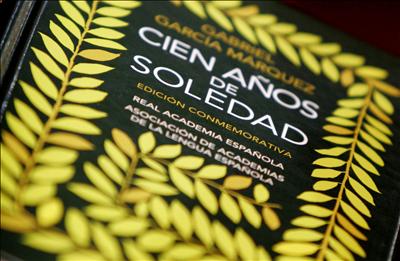
This year we are proud to Celebrate 50 years of One Hundred Years of Solitude.

Join us for this historic event as we read aloud Nobel Laureate Gabriel Garcia Marquez’s master work One Hundred Years of Solitude cover to cover.

Last year over 500 people participated and read the 1605 and 1615 Quixotes in 18 languages.

Currently the week long marathon is programmed as follows: MONDAY APRIL 17 – EL CENTRO HISPANO OF DURHAM, TUESDAY APRIL 18 – UNC CHAPEL HILL AND ELON UNIVERSITY, WEDNESDAY APRIL 19 – UNC OF CHARLOTTE, THURSDAY APRIL 20 – MEREDITH COLLEGE & Castila, FRIDAY APRIL 21 – DUKE UNIVERSITY.

One Hundred Years of Solitude. Read Live and Aloud! Join Us!

100 Years of Solitude MARATHON READING – LECTURA MARATÓNICA


Artist Studio Project, en colaboración con varias universidades y organizaciones sin fines de lucro, los invitan a participar en 2do maratón literario anual 2017 de El Festival de El Quijote.

Este año estamos orgullosos de Celebrar los 50 años de Cien Años de Soledad.

Únase a nosotros para este acontecimiento histórico mientras leemos en voz alta Cien años de soledad el trabajo maestro de Gabriel García Márquez, ganador del premio Nobel.

El año pasado más de 500 personas participaron y leyeron El Quijote en 18 idiomas.

El maratón de una semana de duración está programado de la siguiente manera: lunes 17 de abril – El Centro Hispano de Durham, martes 18 de abril – UNC Chapel Hill y Elon University, miércoles 19 de abril – UNC de Charlotte, jueves 20 de abril – Meredith College y Castila, y el viernes 20 de abril la universidad de Duke.

Cien Años de Soledad. ¡Leído en voz alta! ¡Únete a nosotros!

100 Years of Solitude MARATHON READING – LECTURA MARATÓNICA

Learn More »

LIVE 100 Years of Solitude MARATHON READING – LECTURA MARATÓNICA

LIVE – Marathon Reading – One Hundred Years Of Solitude

EN VIVO – Lectura Maratónica – Cien Años De Soledad

Artist Studio Project NC

2nd Annual El Quixote Festival Goes Live!
2º El Festival Del Quijote Se Va En Vivo!

One Hundred Years of Solitude Marathon Reading – Lectura Maratónica Cien Anos de Soledad

COLLABORATORS – COLABORADORES:


El Centro Hispano Durham
LIVE – April 17, 2017 5pm – 8:00pm

MARATHON READING – LECTURA MARATÓNICA
April 17, 2017

EL CENTRO HISPANO DURHAM NC
2000 CHAPEL HILL RD #26A, DURHAM, NC 27707

READING TIMES ARE : 5PM – 8PM

CONTACT: PILAR ROCHA-GOLDBERG – PRESIDENT & CEO
PLENTY OF GENERAL PARKING


ELON UNIVERSITY
LIVE – April 18, 2017 3 pm – 6pm

MARATHON READING – LECTURA MARATÓNICA

APRIL 18, 2016

100 CAMPUS DRIVE, ELON, NC 27244
LOCATION: CARLTON COMMONS

READING TIMES ARE:  3 PM – 6PM

CONTACT: MINA GARCIA – ASSOCIATE PROFESSOR OF SPANISH


 CastiLa – CENTRO INTERNACIONAL DE ESTUDIOS HISPÁNICOS

LIVE – April 20, 2017 10 am – 12:00 pm (USA EST)

PLEASE NOTE THIS EVENT WILL BE LIVE FROM GRENADA SPAIN 10:00 AM EST AND 4:00 PM MADRID TIME


MEREDITH COLLEGE
LIVE – April 20, 2017 11 am – 2 pm

MARATHON READING – LECTURA MARATÓNICA

APRIL 20, 2017

Cate Student Center Lounge (2nd floor)
3800 Hillsborough St, Raleigh, NC 27607

CONTACT: Astrid Sandunguera Billat

PLENTY OF GENERAL PARKING


THE DEPT OF ROMANCE STUDIES UNC CH
LIVE – April 18, 2016 11:30 am – 2:30 pm

MARATHON READING – LECTURA MARATÓNICA
APRIL 18, 2016

TOY LOUNGE, DEY HALL, 
UNC CHAPEL HILL, NC 27599

READING TIMES ARE : 11:30 AM – 2:30PM

FOR THOSE DRIVING TO CAMPUS, THERE IS STREET PARKING AS WELL AS SEVERAL PARKING DECKS ON FRANKLIN ST. OR ROSEMARY ST.


UNC – CHARLOTTE DEPARTMENT OF LANGUAGES AND CULTURE STUDIES
LIVE – April 19, 2017  5:30 pm – 8:30 pm


MARATHON READING – LECTURA MARATÓNICA

APRIL 19, 2017

LOCATION: ROWE Building – room 130 UNCC Main Campus
9201 UNIVERSITY CITY BOULEVARD | CHARLOTTE, NC 28223

READING TIMES ARE: 5:30 pm – 8:30 pm

CONTACTS: SUSANA CISNEROS, NHORA GÓMEZ-SAXON


DUKE UNIVERSITY ROMANCE STUDIES
LIVE – April 21, 2017 12 NOON – 3pm

PERKINS LIBRARY – 411 CHAPEL DR, DURHAM, NC 27705 2nd Floor! Room #218

MARATHON READING – LECTURA MARATÓNICA

APRIL 21, 2016

WILLIAM R. PERKINS LIBRARY – 411 CHAPEL DR, DURHAM, NC 27705

READING TIMES ARE: 12PM – 3PM

CONTACT: MIGUEL ROJAS-SOTELO


Artist Studio Project in collaboration with several universities, colleges and nonprofits invite you to participate in the 2nd Annual week long El Quixote Festival Literary Marathon 2017. This year we are proud to Celebrate 50 years of One Hundred Years of Solitude. Join us for this historic event as we read aloud Nobel Laureate Gabriel Garcia Marquez’s master work One Hundred Years of Solitude cover to cover. Last year over 500 people participated and read the 1605 and 1615 Don Quixotes in 18 languages. Currently the week long marathon is programmed as follows: MONDAY APRIL 17 – EL CENTRO HISPANO OF DURHAM, TUESDAY APRIL 18 – UNC CHAPEL HILL AND ELON UNIVERSITY, WEDNESDAY APRIL 19 – UNC OF CHARLOTTE, THURSDAY APRIL 20 – MEREDITH COLLEGE & CastiLa, FRIDAY APRIL 21 – DUKE UNIVERSITY.
Read Aloud! Join Us!
A Production Of Artist Studio Project: Rafael A. Osuba

Learn More »

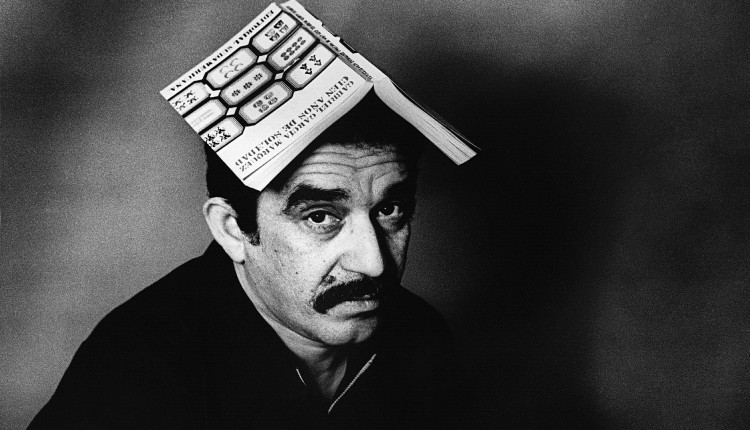
Gabriel Garcia Marquez Reads From His Book

Gabriel-Garcia-Marquez-

Title
Colombian writer Gabriel García Márquez reading from his work (Final Pages of:The Autumn of the Patriarch)
Contributor Names
García Márquez, Gabriel, 1927-2014.
Archive of Hispanic Literature on Tape (Library of Congress)
Created / Published
1977.
Subject Headings
–  Colombia–Prose
Notes
–  In Spanish.
–  Recorded Sept. 7, 1977, in the Library of Congress Recording Laboratory, Studio B, Washington, D.C.
–  Recorded for the Archive of Hispanic Literature on Tape.
–  Production level cataloging.
–  Also available in digital form on the Library of Congress Web site.
Medium
2 sound tape reels : analog, 7 1/2 ips, full track, mono. ; 10 in.
Call Number/Physical Location
LWO 9648
Digital Id
http://hdl.loc.gov/loc.mbrsrs/ahlot.93842348
Library of Congress Control Number
93842348
Online Format
audio
Learn More »

Who Was Miguel De Cervantes?

About Miguel de Cervantes

WHY THE BIG DEAL?

Full Name: Miguel de Cervantes Saavedra

(September 29, 1547 – April 22, 1616) Death Commemorated on April 23, along with William Shakespeare 


BIO- Miguel de Cervantes Saavedra

In 1547, the year when Cervantes was born, the world was no longer a small place, and Spain, under the reign of Charles I, made up half of that world. Alcalá de Henares, a busy, vibrant university town thirty kilometres from Madrid, was where Miguel de Cervantes’ life began. The fourth son of a modest “leecher” –as barber-surgeons were called at that time–, very little is known about Miguel’s childhood and adolescence. His father, Rodrigo, always lived in penurious circumstances, beleaguered by debt. His hazardous job took him from Alcalá to Valladolid, and then to Seville, though first to Córdoba, but there is some doubt as to whether his wife, Leonor de Cortinas, and their six children accompanied him on his wanderings.

The only thing that is certain, is that in 1566 Miguel de Cervantes was living in Madrid, together with the rest of his family. In 1568, he penned some poems on the death of Queen Elizabeth of Valois –wife of Philip II–, that were published the following year by Juan López de Hoyos. But before the year was out, he was in Rome. How did he get there and why did he go? Documents exist of an arrest warrant against a certain Miguel de Cervantes who was tried in absentia for having wounded a foreman in a duel. The sentence contained an ironic nod to the future: ten years in exile and the cutting off of his right hand. However, many people maintain that this Cervantes is not Cervantes, or that it is another Cervantes. In the Eternal City he worked in the retinue of the future Cardinal Acquaviva and then entered the army, until one day, as logic would have it –he was a soldier, he was Spanish and it was the 7th of October, 1571– he found himself in the Gulf of Lepanto, history’s stage. The sea was calm, the rival fleets roared and crept up on each other, and Miguel de Cervantes was suffering from a fever. He was given permission to take cover, but he wanted to leave his mark on history so he readied himself for combat –“the greatest event seen by past centuries”– in a skiff belonging to the galley La Marquesa. Thirty thousand men died on the Turkish side and twelve thousand on the Christian side, with the latter proclaiming victory. Three arquebus bullets hit Cervantes. Two got him in the chest and a third rendered his left hand useless.

After a few months convalescing in a hospital in Messina, Sicily, he rejoined the army. The Mediterranean had become a huge battleground and Cervantes remained caught up in the whirlwind of history: Navarino, Corfu, Tunisia. He travelled the length and breadth of Italy, living to the fullest –reading extensively and enjoying life even more– and, in 1575, embarked on a ship back to Spain. He had letters of recommendation from Don Juan of Austria and the Duke of Sesto, but these letters, written with the aim of making his existence in Spain easier, ended up complicating his life. In the waters of the Gulf of Roses, the schooner Sol fell into the hands of Barbary pirates who mistook Cervantes for someone important. This delayed his rescue and increased his ransom. Cervantes spent five years in the dungeons of Algiers from which he tried to escape four times until, on the 19th of September 1580, the Trinitarian friar Juan Gil appeared with the ransom. Cervantes returned to Spain to find a country in trouble –caught trapped between grime and luxury, going from one bankruptcy to another as it expanded its boundaries and those of the world– and his family ruined by the cost of his release. In Madrid, he tried to use his achievements as a hero of Lepanto, as well as a former prisoner, to find an administrative post. He was sent to Orán on an obscure, month-long assignment with a hint of espionage, was paid fifty ducats, but that was it. Then he glimpsed America. Cervantes wrote to the Council of the Indies, asking to be sent there and given an administrative job. Nothing. The American dream –what might have been– faded on the horizon and became blurred in an ocean of unanswered prayers. “I am content with little, although I desire much” he wrote in Journey to Parnassus.

So he remained in Spain, he still had Spain, and worked on La Galatea, a pastoral novel. He frequented a tavern on Tudescos Street owned by an Asturian, and he also frequented the tavern owner’s wife, Ana Franca, with whom he had a daughter. In December 1584, he travelled to Esquivias, Toledo, to intercede on the publication of the songbook of a deceased friend, and suddenly –in other words, for no clear reason– he married Catalina Palacios Salazar, a woman half his age. He spent two years in Esquivias, publishing La Galatea in 1585. Finally, in 1587, he got a job as Commissioner of Supplies in Seville. He wrote miscellaneous poems to be placed in bouquets of flowers and songbooks, sold comedies, earned poetic justice and as a prize was given silver spoons. He traversed Andalusia from end to end, requisitioning grain and oil for the Invincible Armada. The gloomy hero inhaled the dust from the roads and got used to the discomfort of the inns. He fixed the landscape in his mind’s eye and, in addition, ended up in prison (in Castro del Río, in the province of Córdoba, and in Seville) accused of collecting what he should not have, or taking too long to give the tax office the taxes he had collected. Furthermore, he was excommunicated for seizing church property.

In 1601 the court moved to Valladolid and, three years later, Cervantes settled down by the River Pisuerga, surrounded by women: his wife, sisters, daughter and niece. Without warning, they experienced trouble, distress and unwanted dealings with the law. An important gentleman died –in what today we would call “mysterious circumstances”– at the door, or perhaps even within, the rented house where the Cervantes family lived. The investigation did not solve the death of the gentleman, but it did conclude that all the women of the household led a licentious life that bordered on prostitution. And then, in 1605, something happened; the printing presses of Juan de la Cuesta published the first part ofDon Quixote. It was an extraordinary success, was reprinted five times that year and was soon translated into English and French.

The century progressed; the court returned to Madrid in 1606, and Cervantes returned with it. The Count of Lemos became a protector, but Cervantes suffered another disappointment when his famous patron left for Naples to serve as viceroy but did not include him in his entourage. Cervantes was a man on the cusp of two centuries and a writer of the present who looked to the future. With regard to that future, he was particularly concerned about the salvation of his soul, so he increased his presence in orders and congregations and devoted himself to pious works which he alternated with writing. In 1613 his Exemplary Novels were published. A year later, Alonso Fernández de Avellaneda –a pseudonym that has never been explained– published a second, spurious sequel to Don Quixote. As his twilight approached, Cervantes’s activity became frenzied: he wrote Journey to ParnassusEight Comedies and Eight New InterludesNever before Performed and, in 1615, a sequel to Don Quixote, where fiction and reality shone to offer a refined version of the modern novel.

In 1616, as spring advanced, Cervantes, bed-ridden due to illness –diabetes, perhaps liver failure–, awaited death at his home in Madrid on León Street. His agony is reflected in the dedication and prologue of The Trials of Persiles and Sigismunda. “Goodbye, thank you; goodbye, witticisms; goodbye, rejoicing friends; I am dying, and looking forward to seeing you soon, happy in the hereafter.” He withstood the pain of the illness and began fading until, on the 22nd of April, when after so much living, the moment to die arrived.

SOURCE: Ministerio de Educación, Cultura y Deporte – www.400cervantes.es/en/ – all rights reserved

TOP

TIMELINE

1547

Birth in Alcalá de Henares

Where and when was Cervantes born? For centuries this was a double mystery. The first was solved after his christening certificate, dated 9th of October 1547, was found in the parish of Santa María la Mayor in Alcalá de Henares. As for the exact date, we can only assume that it was the 29th of September, the day of San Miguel (Saint Michael).


1568

Madrid,

verses of circumstances Quivering in the court. Queen Elizabeth of Valois, the third wife of Philip II, dies after giving birth to a child who will also die. A shiver runs through Madrid, and the young Cervantes, encouraged by the grammar teacher Juan López de Hoyos, writes poems that will be published the following year in A Story and Relationship of the illness, death and funeral of the Queen.


1569

Rome,

waiter to Monsignor Acquaviva Cervantes seeks his fortune in Rome among the dignitaries and popes. He works as a waiter in Monsignor Acquaviva’s retinue, a figure who later goes on to wear the purple robes of the cardinal. When his stint at the palace is over, Cervantes joins Diego de Urbina’s company as a soldier. He traverses Italy and it traverses him.


1571

Lepanto,

Cervantes’ fate is entangled with the story of the day of the Battle of Lepanto that pits the Holy League against the Ottoman fleet. On the bloody foam of the sea, amid the chaos of arquebuses, ships on fire, mutilated bodies and the terrifying sound of fifes, Cervantes is wounded in the chest and looses the use of his left hand.


1572

Convalescence in Messina,

The horrendous battle results in uncertainty and throngs of people at the hospital in Messina, Sicily, where Cervantes recovers from his injuries. Sicily is under Spanish rule at that time, and is home to the winter quarters for Don Juan of Austria’s fleet. Meanwhile, Cervantes survives and within a few months is back in the military.


1575

Captive in Algiers

The Mediterranean, infested with pirates, is a sea at war. In Naples, Cervantes embarks on a ship bound for Spain but, in the Gulf of Roses, his schooner is boarded by the corsair Arnaute Mamí’s men. Cervantes ends up in Algiers, the bustling base of the Barbary pirates and a large slave market. It would take five years, and four failed escape attempts, to regain his freedom.


1580

Denia, free again

Eleven years have gone by since he left Spain and a lot has happened in many places: Tunisia is lost and recovered, Juan de Austria dies, Philip III is born, the court makes its home in Lisbon. Spain continues to expand its world: Legazpi founds the city of Manila, Mendaña reaches the Solomon Islands. And Cervantes begins to dream of America, in vain.


1581

Orán, an obscure mission

An official assignment – about which little or nothing is known – and the mysterious veil of this Spanish-ruled place in North Africa turn this journey to Oran – in May and June 1581 – into another mystery that surrounds Cervantes’ life. Involving diplomacy, espionage or work of an administrative kind, the only evidence of it is that, on his return, he was paid fifty ducats.


1584

Marriage in Esquivias

Cervantes surrenders to amorous pursuits. Having just had a daughter with Ana Franca – the wife of a tavern owner – he then travels to Esquivias, Toledo, to help the widow of a poet friend to posthumously publish a songbook. Once there, he marries Catalina Palacios Salazar, a woman half his age. He sells the rights to La Galatea, which is published the following year.


1587

Commissioner of Supplies, Seville

In time everything is achieved, even the dull position as collector of supplies in Seville. But back then Seville was like a cosmos, a foretaste of the Indies, where of all its wealth and splendour arrive. He does not stop writing, and pens poems and plays while calamities – debt, charges against him, and even excommunication – rain down on him.


1592

Castro del Río (Córdoba), a fleeting imprisonment

The life of a collector is not particularly easy. Cervantes is accused of selling wheat without authorisation and spends a few days under arrest in Castro del Río. Some scholars believe that is was here where the idea for Don Quixotecame to light; others maintain it happened later, when he was imprisoned again in Seville.


1603

In Valladolid, following the court

The Cervantes family – made up of his wife, sisters, daughter and niece – follow the court all the way to Valladolid, settling in lodgings above a tavern, very close to the town’s abattoir, in a small building housing many people. In this stressful environment, Cervantes finishes the first part of Don Quixote.


1605

Madrid, the first part of Don Quixote

Six hundred and sixty four pages and many typos. From Juan de la Cuesta’s printing press on Atocha Street in Madrid, the novel that changed novels forever was born. The bookseller Francisco de Robles, owner of the rights, sells each copy for two hundred and fifty maravedis. The book soon sells out and reprints are published at once, some of them illegally.


1613

Madrid, Exemplary Novels

The novel, long or short, was always there within Cervantes, who makes the Italian novella his own, in other words, Spanish. It seems that there are to be twelve Exemplary Novels, either because there are two in one –The Dialogue of the Dogs is part of The Deceitful Marriage – or because for years The Pretended Aunt was included in that number, although today this opinion has been rejected.


1614 – 1615

Tarragona and Madrid, a spuriousDon Quixote and a real one

Alonso Fernández de Avellaneda – a pseudonym that is still something of a puzzle – publishes, in Tarragona, a spurious sequel to Don Quixote. The ruse spurs Cervantes to finish the second part of Don Quixote, and he enriches the plot by adding an element of metafiction to the discourse of the novel which is published a year later in Madrid. Publishes Journey to Parnassus and Eight Comedies and Eight New Interludes, Never before Performed.


1616

Madrid, agony and death

In mid April, the writer begins to feel death approaching, the hand of which can be felt at his home on León Street, on the corner with Francos Street (today Cervantes Street). He receives the last rites, writes the dedication for Persiles and, three days later, on the 22nd of April, dies. The following day he is buried in the convent of the Discalced Trinitarians.


SOURCE: Ministerio de Educación, Cultura y Deporte – www.400cervantes.es/en/ – all rights reserved

TOP
PROGRAMA OFICIAL IV CENTENARIO – CERVANTES

Learn More »

Films – NC Latin American Film Festival

Click for RTVE TV Series

Films – NC Latin American Film Festival

NC LATIN AMERICAN FILM FESTIVAL

Collaboration With NC Latin American Film Festival (Duke)

Films that inspire the imagination and about Dreaming Big!


LIBERTADOR

WITH ENGLISH SUBTITLES

SEPT. 29, 2015 CAROLINA THEATRE

7:00 PM

Learn More

libertador---600


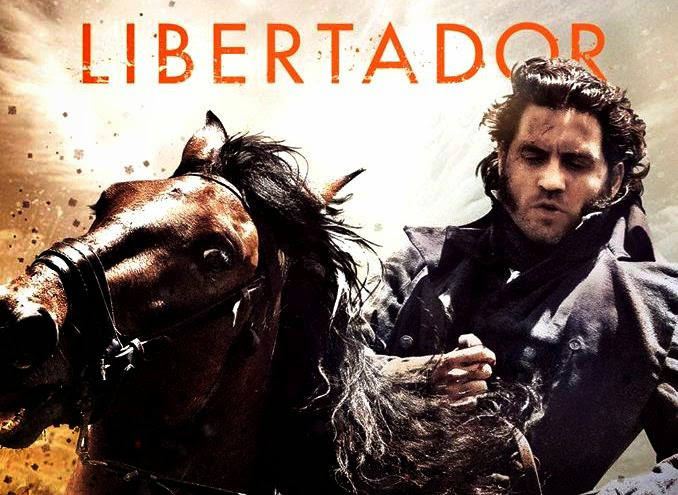
LIBERTADOR | THE LIBERATOR. Alberto Arvelo / 119 min / Venezuela / 2014

Edgar Ramírez stars in this biopic of one of Latin America’s greatest figures. Simón Bolívar fought over 100 battles against the Spanish Empire in South America. He rode over 70,000 miles on horseback. His military campaigns covered twice the territory of those of Alexander the Great. But his army never conquered – it liberated. The most expensive Latin American film ever produced, The Liberator is a riveting portrayal of the man who led Venezuela, Colombia, Panama, Peru, and Ecuador toward independence. The film was shortlisted with other eight titles for the Best Foreign Academy Award and was the favorite Venezuelan film at the local box office.

Introduced by Pratrick D. Duddy. Former US. Ambassador to Venezuela, Director Duke Center for Latin American and Caribbean Studies.

Historical notes by Miguel Chirinos, Venezuelan Cultural Association

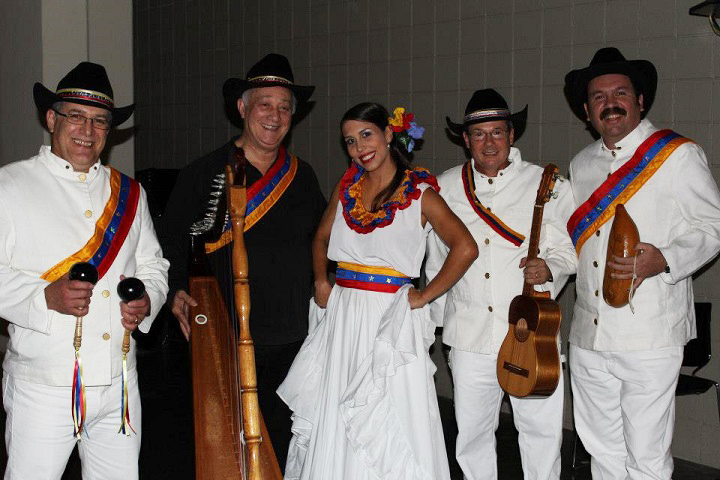
 LOS TEPUYEROS

Los Tepuyeros El Quixote Festival

About The NC Latin American Film Festival:

Program – Click Here

The NC Latin American Film Festival celebrates the power and artistry of Latin America’s film and audiovisual production. Its mission is to provide a space in North Carolina for Latin American images, sounds, and stories to reach a wider audience. The Festival provides filmmakers the opportunity to showcase their work in a stimulating and community friendly context.

The Festival was founded in 1986, by Sharon Mujica and for more than two and a half decades has shared both classics and new releases from different genres of a rich and prolific Latin American cinema tradition. Beginning with only 3 films, the Festival has grown to encompass up to 16 campuses in the Triangle, Greensboro and the Charlotte areas, with up to 35 screenings. Since 2008 the festival has been directed by Miguel Rojas-Sotelo.

Audiences have been exposed to a wide range of critical and responsible narratives from Latin America and the Caribbean. The Festival has invited important filmmakers and directors from many of the 26 countries of the region, it has shown films in 13 languages (not only Spanish), and has become a bridge between universities and cultural centers in the region. In response to the demographic changes in North Carolina, the Festival has also screened multiple films and invited speakers on issues such as migration, globalization, and new political landscapes in the Americas.

This year the festival focuses on how film represents the dreams of many in the region, by the experience of baseball as one of the most important sports played and followed in the Americas; it also explores how art plays a role in the lives young undocumented migrants and the victories and struggles of citizens of the Bolivarian Republic of Venezuela during the past two decades. The film festival will encapsulate the fundamental relationship between life, sports, music, history and politics in the Americas. Audiences will enjoy the presence of filmmakers, scholars, musicians, and artists.

Organized by The Consortium in Latin American and Caribbean Studies at the University of North Carolina at Chapel Hill and Duke University. This event is made possible through funding from the Andrew W. Mellon Foundation and the US Department of Education. Co-sponsored by the Duke Center for Latin American and Caribbean Studies, Duke Screen/Society, Duke Art of the Moving Image, Duke Center for Documentary Studies, Duke Romance Studies, Duke Women’s Studies, Duke Literature Program, FHI Humanities Writ Large, the Duke Brazil Initiative and the Global Brazil Lab, the Institute for the Study of the Americas at UNC-CH, the Latino Migration Project at UNC-CH, UNC-CH Romance Studies, the Center for Global Initiatives at UNC-CH, PRAGDA, North Carolina Central University, the Carolina Theatre of Durham, and the Durham Arts Council.
The Venezuelan series is possible thanks to the Centro Nacional Autónomo de Cinematografía de Venezuela (CNAC) in collaboration with the Center for Latin American Studies at the University of Pittsburgh, and the New York University Center for Latin American and Caribbean Studies. Curated by Haydeé Chavero and Miguel Rojas-Sotelo. Thanks to the El Quixote Festival.

 2015 NC LATIN AMERICAN FILM FESTIVAL

BASEBALL – DREAMS – VANISHED REBELLIONS | INVITED COUNTRY: VENEZUELA

September 15 – October 13, 2015  |

Festival Week. September 25 – October 4, 2015

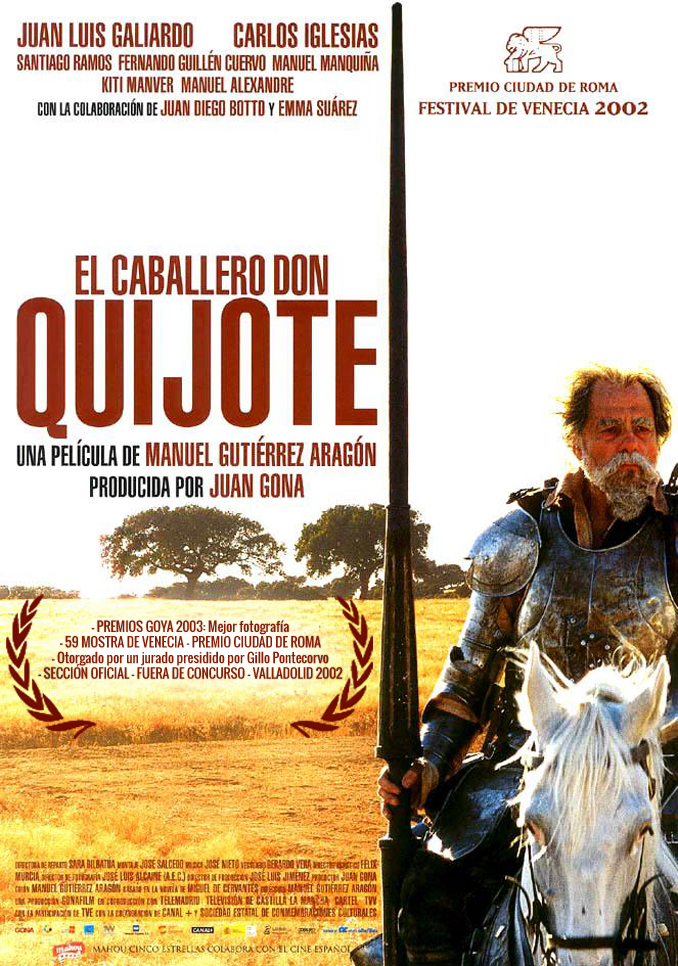
EL CABALLERO DON QUIJOTE

WITH ENGLISH SUBTITLES 

OCTOBER 5, 2015 MEREDITH COLLEGE 

7:00 PM

Learn More

El Caballero Don Quijote - Film -Película - El Quixote Festival


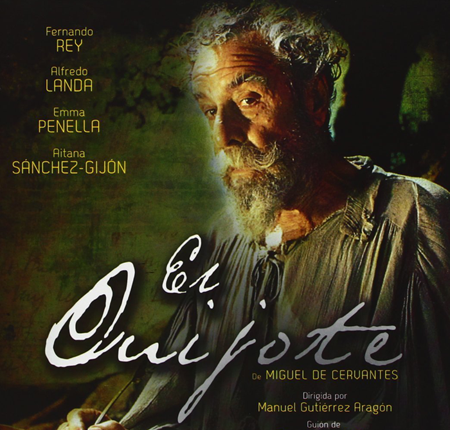
EL Caballero Don Quijote | The Knight Errant Don Quixote /119 min / Spain / 2002

Based on Book 2 1615 – We Celebrate 400 years later.

After an old soldier named Miguel de Cervantes compiled the adventures of Don Quixote and his squire Sancho, they have become famous. After learning that the Turks travel down the coast with a dangerous army, Don Alonso Quijano, the knight Don Quixote, opposed by his niece and housekeeper, will once again engage in a new battle which will begin and end in the Channel off the coast. Dressed in Renaissance armor, quite dated at the time of 1615, the “mad” knight which all mock will undertake all his adventures with his faithful squire. The fearful Sancho Panza, which encourages and flatters imaginary battles for the Hidalgo decides to go with him to support him, as always. Sancho also expects to receive the reward of transforming into a  governor of an island, an old promise that was made by Don Quixote. But his master is very clear about the priority of his battles: undo the spell of his beloved, the imaginary Dulcinea, whom he has never seen. To do this he goes to the black cave to meet Montesinos. They will run into their next adventure along the way.

He will accept honors and tributes by the Duke, who tells him in order for his love Dulcinea to be disenchanted Sancho must receive some thousands of lashes.


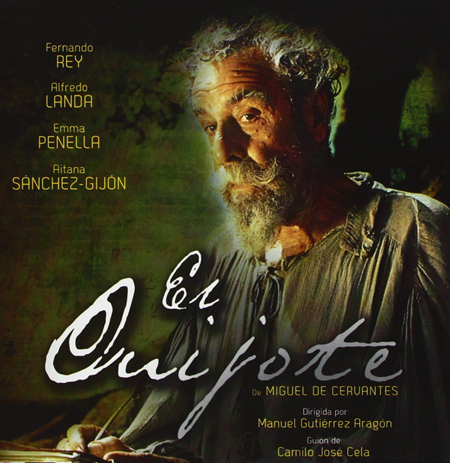
DON-QUIXOTE-DE-LA-MANCHA--450-RTVE


Learn More »

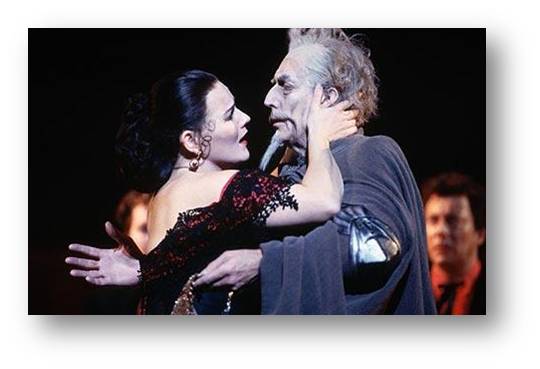
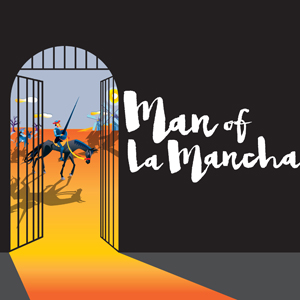
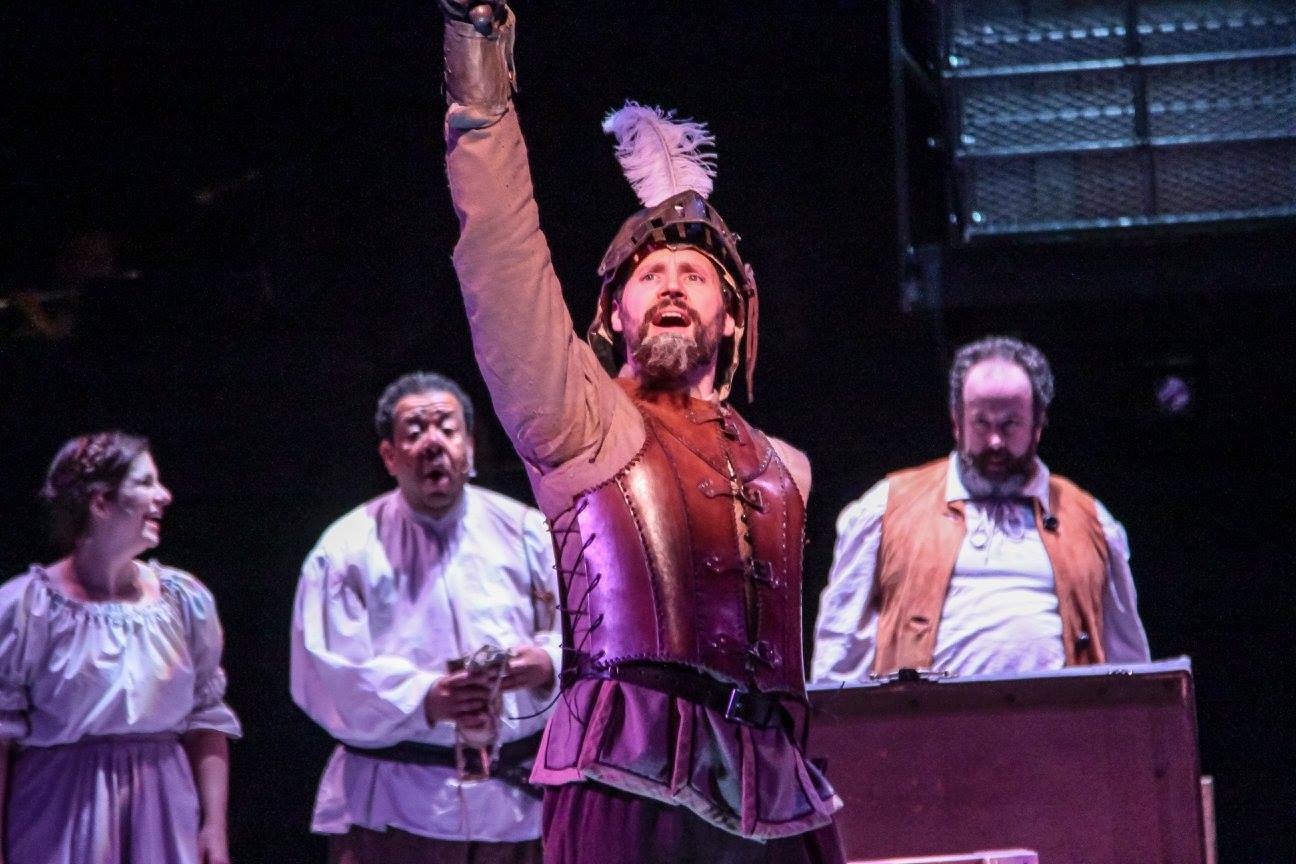
Don Quixote Musical Concerts/ Theatre – Man Of La Mancha

Don Quixote Musical Concerts/ Theatre

Man of La Mancha Cape Fear Regional Theatre   Don Quixote MOLM

Man Of La Mancha – CAPE FEAR REGIONAL THEATRE
September 17, 2015 – October 11, 2015 – Fayetteville NC

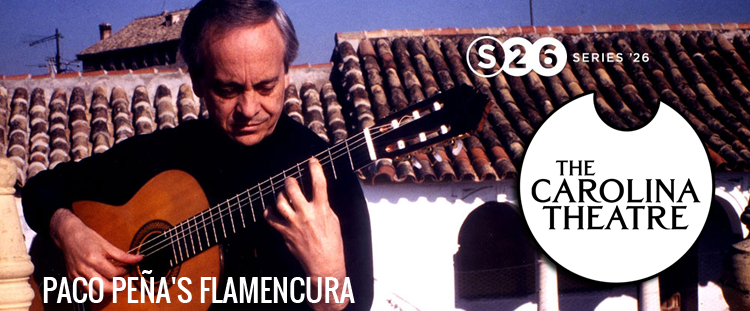
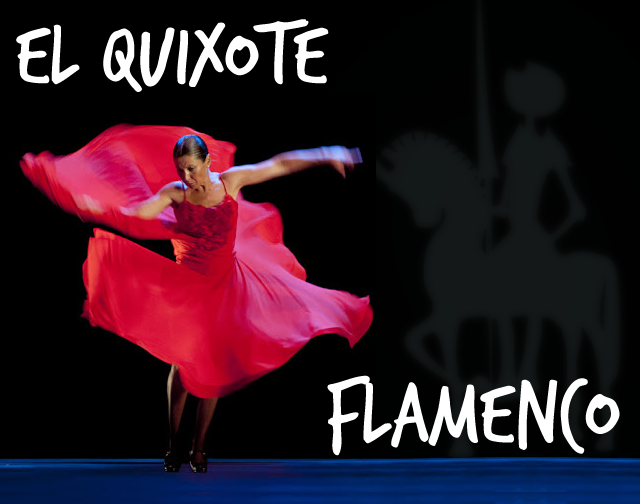
PACO PEÑA’S FLAMENCURA – NOVEMBER 10, 2015  PROMO CODE: (DANCE) 50% OFF ANY TICKET!

PACO PEÑA'S FLAMENCURA

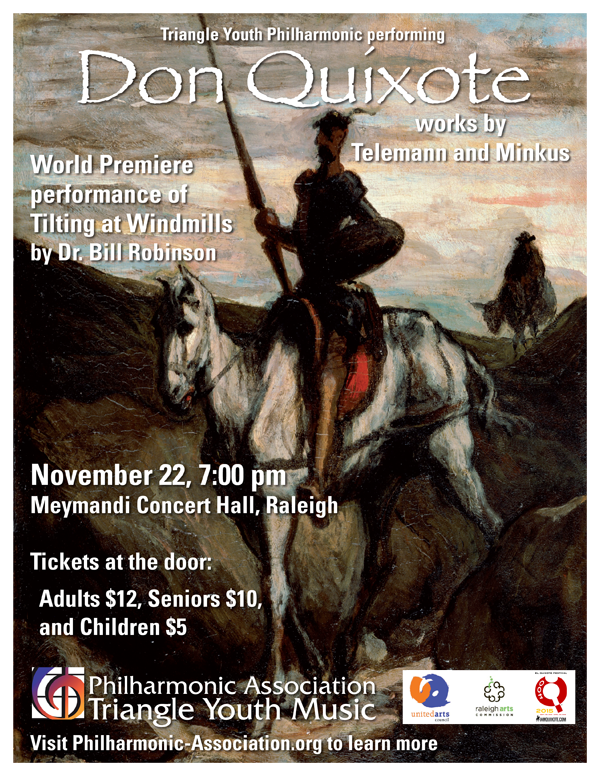
Don Quixote Triangle Youth Philharmonic Concert November 22nd 2015

EL QUIXOTE FESTIVAL CONCERT –  THE PHILHARMONIC ASSOCIATION – TRIANGLE YOUTH MUSIC
November 22, 2015  – Meymandi Concert Hall – Raleigh NC

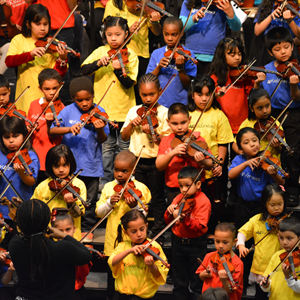
Kidznotes Don Quixote Concert "Dream The Impossible Dream"

EL QUIXOTE FESTIVAL CONCERT –  “Dream The Impossible Dream” – kidz notes

deceMBER 12, 2015  – Holton Career & Resource Center – durham nc

MUSIC OF THE CAROLINAS - EL QUIXOTE FESTIVAL ED STEPHENSON - APRIL 10 2016

EL QUIXOTE FESTIVAL CONCERT –  “ED STEPHENSON & The Paco Band” – NORTH CAROLINA MUSEUM OF HISTORY

APRIL 10, 2016 – MUSIC OF THE CAROLINAS SERIES –

Ed Stephenson and the Paco Band
Ed Stephenson Raleigh, NC based Canadian guitarist and Alanna recording artist, Ed (Stefanyshyn) Stephenson’s virtuosity extends throughout the Classical Spanish, Flamenco, and Flamenco Fusion genres. He has performed throughout North America as a soloist, a member of the North Carolina Guitar Quartet and the Paco Band. His numerous return engagements with the North Carolina Symphony, Raleigh Symphony, North Carolina Theater, North Carolina Bach Festival and concert series at universities and colleges in the southeast, have established him as one of the region’s most sought after performers. His versatility is reflected in his discography: Kypoyka – Ukrainian Children’s Songs and Stories, Winter Branches – North Carolina Guitar Quartet (Liscio Recordings) (1997), Ino Live – Ed Stephenson and the Paco Band (Liscio Recordings) (2011), Esencia – Ed Stephenson and the Paco Band (Alanna Records) (2012), A Paco Band Christmas – Ed Stephenson (2013), & Rosamaria – Ed Stephenson and the Paco Band (Alanna Records) (2015). The Classical Voice of North Carolina praised his Esencia album saying, “It has all the characteristics and virtuosity of traditional flamenco guitar but falls outside – or perhaps expands upon – the limited traditional flamenco harmonies and structure. You find influences such as bossa nova or Latin, rock, jazz, swing and salsa, and others.” His most recent CD Rosamaria was recently completed with the Paco Band and will be released in April 2015 under the Alanna Records label.

This performance is part of the El Quixote Festival, celebrating The 400 Year Anniversary Of El Quijote, a Spanish novel by Miguel de Cervantes Saavedra, written in two parts: El ingenioso hidalgo don Quijote de la Mancha, 1605; El ingenioso caballero don Quijote de la Mancha, 1615.

The Festival’s initial intention is to celebrate the 400th anniversary and closing of Miguel De Cervantes Saavedra’s two books, known now simply as El Quijote, while placing a special emphasis on artistic creations in the Spanish language. Genres such as visual arts, literature, opera, music, dance, theatre, film, gastronomy along with various academic events are being planned throughout the year.

Music of the Carolinas concerts are made possible thanks to the support of Williams Mullen and the NC Museum of History Associates.

flamenco-el-quixoteplay


Learn More »

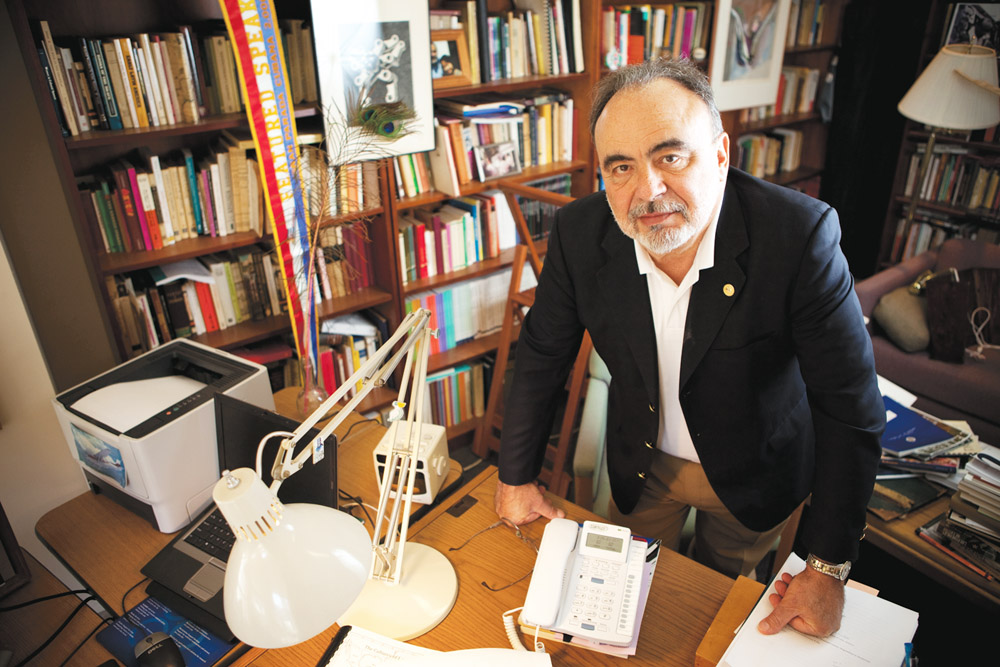
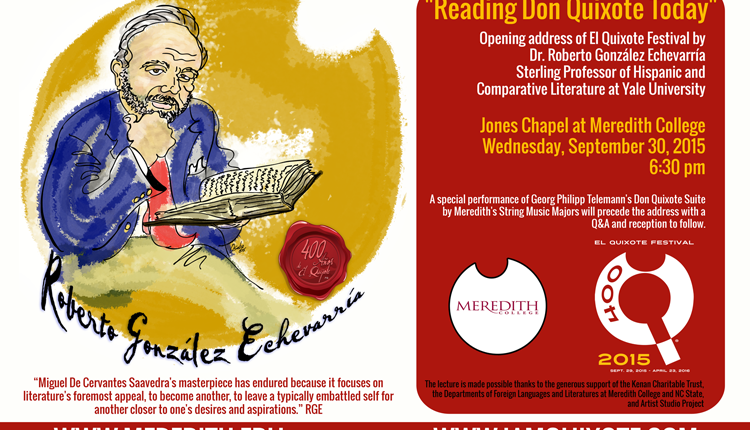
OPEN KEYNOTE ADDRESS – ROBERTO GONZÁLEZ ECHEVARRÍA Ph.D.

robertoechevarria

OPEN KEYNOTE ADDRESS
"Reading Don Quixote today,"

ROBERTO GONZÁLEZ ECHEVARRÍA Ph.D.
Sterling Professor of Hispanic and Comparative Literature
September 30th, 2015 – 6:30 PM
MEREDITH COLLEGE – RALEIGH NC
DOORS OPEN AT 6:00 PM


 Festival Events Calendar - CELEBRATING 400 YEARS OF EL QUIXOTE CELEBRANDO 400 Años DE EL QUIJOTE  Press Release – Meredith Roberto Gonzalez Echevarria

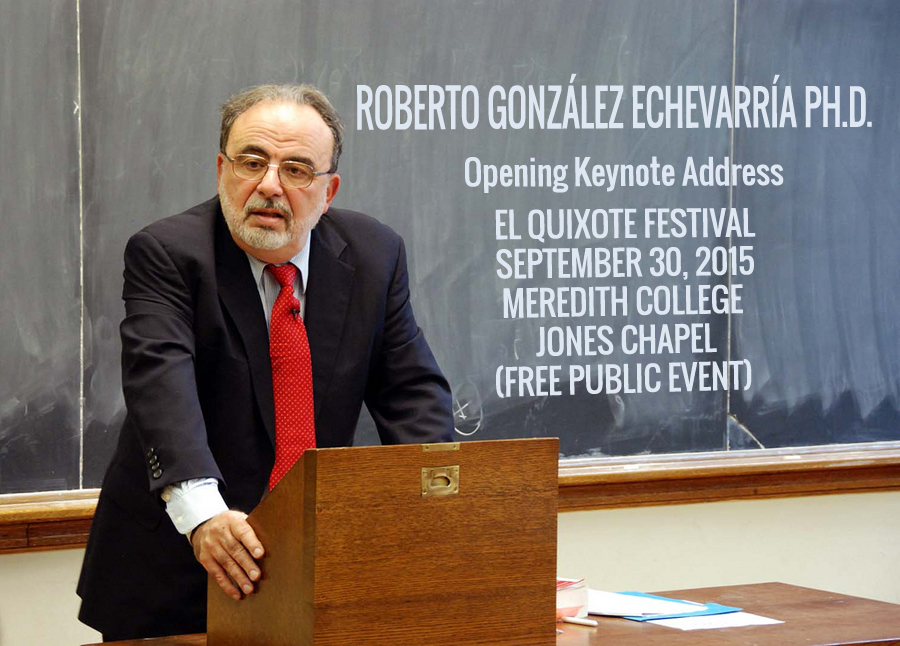
ROBERTO GONZÁLEZ ECHEVARRÍA PH.D. - Opening Keynote Address EL QUIXOTE FESTIVAL SEPTEMBER 30, 2015 MEREDITH COLLEGE JONES CHAPEL (FREE PUBLIC EVENT)

 Cervantes'

ROBERTO GONZALEZ ECHEVARRIA. Sterling Professor of Hispanic and Comparative Literature, Yale University. B.A. University of South Florida (1964), MA, Indiana University (1966), MPh. Yale (1968), Ph.D.Yale (1970); Honorary Doctorates: Colgate (1987); U. of South Florida (2000); Columbia (2002). In 1999 was inducted into the American Academy of Arts and Sciences. Symposium in Honor of RGE, Universidad de Puerto Rico, Arecibo, November 21-23, 2002. Issue in Honor of RGE: Encuentro de la Cultura Cubana (Madrid),  no. 33 (2004). Presidential Honor: National Humanities Medal, 2010.  Taught at Yale (1970-71) Cornell (1971-77), where he one of first editors of Diacritics; since 1977 at Yale, where he was awarded the first endowed chair in Spanish (R.Selden Rose). In 1991 named Bass Professor of Hispanic and Comparative Literature, and in 1995 Sterling Professor, the highest ranking university chair at Yale.  He chaired Spanish and Portuguese (16 years) and also chaired Latin American Studies. RGE has lectured throughout the US, Europe, and Latin America, and was first Hispanist at the School for Criticism and Theory. In 2001 he spoke at Oxford, Cambridge, Berlin, and UCLA. In 2002 he delivered the DeVane Lectures, Yale's most prestigious series. In 2003 seminars at Columbia. Cervantes Lecture at MLA 2004. Since 2005 Boston U., Wisconsin, Salamanca, Alcalá de Henares, Rome, Munich, Universidad Católica de Chile, Colegio de México, Heidelberg, Oxford, etc. 

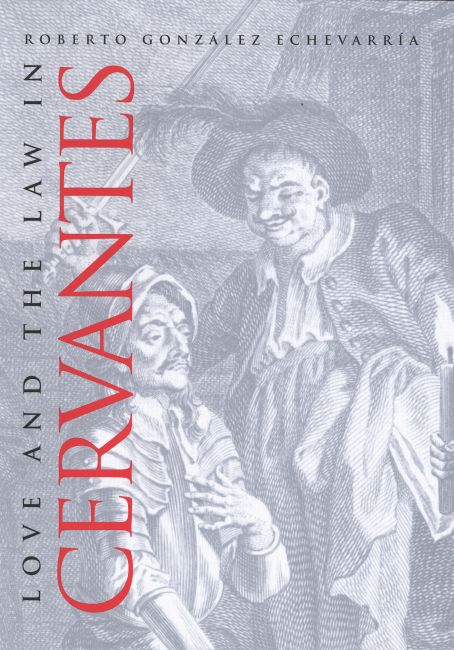
A speaker of Spanish, English, French and Italian, RGE is interested in Spanish, Latin American, French, and Italian literatures. Has been active in critical theory.  He is on the board of  The Yale Review. Currently or formerly on the boards of Hispanic Review, Hispania, Revista Iberoamericana, and other journals in the US and abroad. Awarded a Guggenheim Fellowship and a Senior NEH Fellowship. His Myth and Archive: A Theory of Latin American Narrative (Cambridge, 1990) won awards from the Modern Language Association of America and the Latin American Studies Association. His C-D Rom Miguel de Cervantes received a prize from Choice. The Pride of Havana: A History of Cuban Baseball (Oxford, 1999) won the first Dave Moore Award (Most Important Book on Baseball, 2000). In 2014 he was awarded the National Award for Criticism by the Instituto Cubano del Libro for Lecturas y relecturas.  Other books: Relecturas (1976), Calderón and la crítica (1976), Alejo Carpentier: The Pilgrim at Home (1977), Isla a su vuelo fugitiva: ensayos críticos sobre literatura hispanoamericana (1983), The voice of the Masters: Writing and Authority in Modern Latin American Literature (1985), La ruta de Severo Sarduy (1986) and Celestina's Brood (1993). Co-edited three-volume Cambridge History of Latin American Literature (1996) and edited Oxford Book of Latin American Short Stories (1997). In 1999 Almar (Salamanca) published En un lugar de La Mancha: estudios cervantinos en honor de Manuel Durán, co-edited with Georgina Dopico-Black. Mexico's Fondo de Cultura Económica published a Spanish version of Myth and Archive, and Colibrí in Madrid one of Celestina's Brood. In 2002 Fondo de Cultura brought out Crítica práctica/Práctica, a collection of essays on Latin American Literature. In 2005 Yale Press published Love and the Law in Cervantes and Oxford Miguel de Cervantes’ Don Quixote: 
A Casebook.  In 2008 Renacimiento, in Seville, brought out Oye mi son: testimonios y ensayos sobre literatura hispanoamericana, Verbum in Madrid Cartas de Carpentier, and Gredos Amor y ley en Cervantes.  In 2009 Yale published Fernando de Rojas, La Celestina, ed. RGE,  tr. Margaret Sayers Peden.  Yale published Cuban Fiestas in 2010 and a new translation of Lope de Vega’s Fuenteovejuna with an introduction by RGE.  In 2014 the University of Minas Gerais, in Brazil, published Monstros e archivos, a collection of his essays in Portuguese translation.  

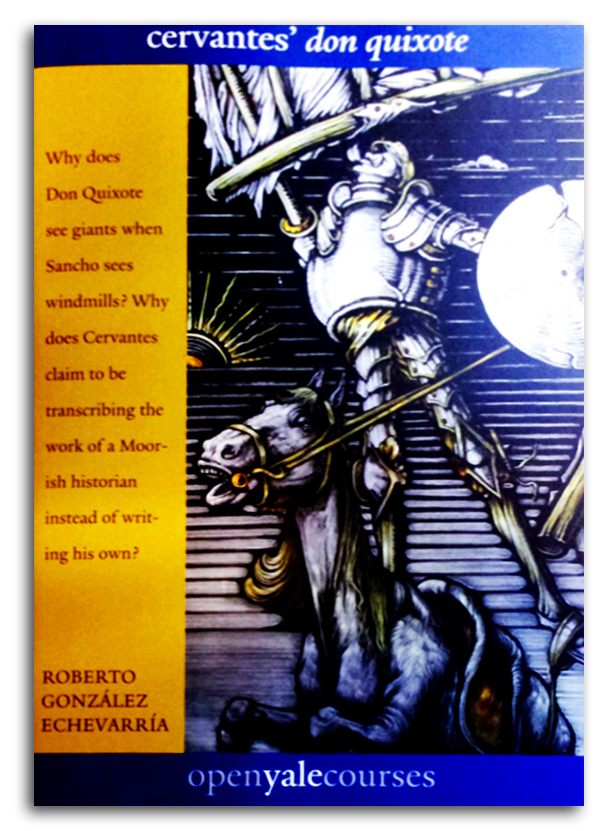
In 2014 the Yale University Press published his Cervantes' Don Quixote, derived from the on-line course. 

Author of over one hundred and fifty articles and reviews in American, Latin American, and European journals, and a frequent contributor to The New York Times Review of Books and other national publications such as The Wall Street Journal, The Village Voice, The Nation, and USA Today.  His work has appeared in Spanish, English, French, German, Portuguese, Polish, Italian, Persian, and soon Chinese. 

Videotaped in the fall of 2009, SPAN 300, RGE’s lecture course on Cervantes’s Don Quijote is available on the web through Yale Open Courses. 

RGE has received a Guggenheim Fellowship and, among others, grants from the Rockefeller Foundation and the Social Science Research Council.

RGE is a private pilot with an instrument rating.


Love and the Law in Cervantes 


Learn More »

Reading Don Quixote Today – Opening address of El Quixote Festival

ROBERTO GONZÁLEZ ECHEVARRÍA PH.D. - Opening Keynote Address EL QUIXOTE FESTIVAL SEPTEMBER 30, 2015 MEREDITH COLLEGE JONES CHAPEL (FREE PUBLIC EVENT)

MEREDITH COLLEGE - EL QUIXOTE FESTIVALReading Don Quixote Today – Opening address of El Quixote Festival

“Reading Don Quixote today,”

SEPTEMBER 30TH, HOSTED BY: MEREDITH COLLEGE

 Doors Open 6:o0 PM – Jones Chapel

A performance of Georg Philipp Telemann’s Don Quixote Suite by Meredith’s String Music Majors will precede the address with a Q&A and reception to follow.

Press Release – Meredith Roberto Gonzalez Echevarria

Learn More

ROBERTO GONZÁLEZ ECHEVARRÍA PH.D. - Opening Keynote Address EL QUIXOTE FESTIVAL SEPTEMBER 30, 2015 MEREDITH COLLEGE JONES CHAPEL (FREE PUBLIC EVENT)

BIO: KEYNOTE SPEAKER – Roberto González Echevarría

El Quixote Book – What is the big deal?

Author’s Full Name: Miguel de Cervantes Saavedra

(September 29, 1547 – April 23, 1616)

Reading Don Quixote Today – Opening address of El Quixote Festival, Dr. Roberto González Echevarría Jones Chapel, Meredith College Wed. Sep 30, 2015 6:30 pm.  Please join us for a Q&A and reception following the address.

The lecture is made possible thanks to the generous support of the Kenan Charitable Trust, the Departments of Foreign Languages and Literatures at Meredith College and NC State, and Artist Studio Project

More info: Renowned Yale scholar to speak at Meredith College as part of statewide Quixote Festival Sterling Professor of Hispanic and Comparative Literature at Yale University, Roberto González Echevarría, will be giving a free public lecture on Wednesday, September 30, 2015, at Meredith College titled “Reading Don Quixote Today” as one of the events kicking off the seven-month long El Quixote Festival (iamquixote.com). The lecture, which will be followed by a Q&A and reception with the speaker, will be at 6:30 pm in Jones Chapel.
Miguel de Cervantes’s celebrated Spanish novel consists of two parts, published in 1605 and 1615,respectively. It was an instant success at the time and made the best-seller’s list in the United States as recently as ten years ago. Over the course of four centuries El Quijote has consistently rated as one of the greatest novels ever written. The dates of El Quixote Festival coincide with the birth (September 29) and death (April 23) of Cervantes (both he and Shakespeare share the same death date: April 23, 1616). In celebration of the 400th anniversary of the novel and its author, the statwide festival will feature art exhibits, literary gatherings, opera, music, dance, theater, cinema, and gastronomy, together with several academic and educational events (events calendar)—including several at Meredith College.

Learn More »

Tertulia Literaria – Literary Gathering

 The Third Literary Gathering is scheduled for February 17, 2016 7pm.

As part of the El Quixote Festival, Queens University of Charlotte in collaboration with ArtSí and LaCa Projects invite you to the third Tertulia Literaria – Literary Gathering.
 

compass gif  LaCa Projects – LATIN AMERICAN CONTEMPORARY ART
1429 BRYANT STREET, CHARLOTTE, NC 28208


The Second Tertulia Literaria – Literary Gathering took place at the Cameron Village Library Raleigh NC

Featuring: DR. Joan Francisco Valdez Santos, Valerie Nieman, Miriam Garcia, Susan La Serna, Cristel Orrand, DR. Astrid Billat, Kenneth McLeod, Wendy Parker, Nancy Werking Poling, Special Musical Presentation: Los Tepuyeros, and Art Exhibit: Pati Reis

Bookmarker-700-cameron


PATI REIS: "More Than Words" ART AT CAMERON VILLAGE REGIONAL LIBRARY

unnamed"I am a native of Brazil, and now I live in Raleigh where I am happily immersed in my career as a tactile artist and business owner. The inspiration for my creations and process come from all over: I picked up needlepoint from my Brazilian grandmother and American patchwork from my aunts. I learned to hand-bind books from a professional bookbinder and developed a passion for re-using materials and found objects at North Carolina State University.  Re-used materials—like newspapers in foreign languages—bring a deeper layer of meaning to my work. 

Since my early life I realized that visual translation is also culture translation. Consequently, I spent most of my time understanding culture expressions." 


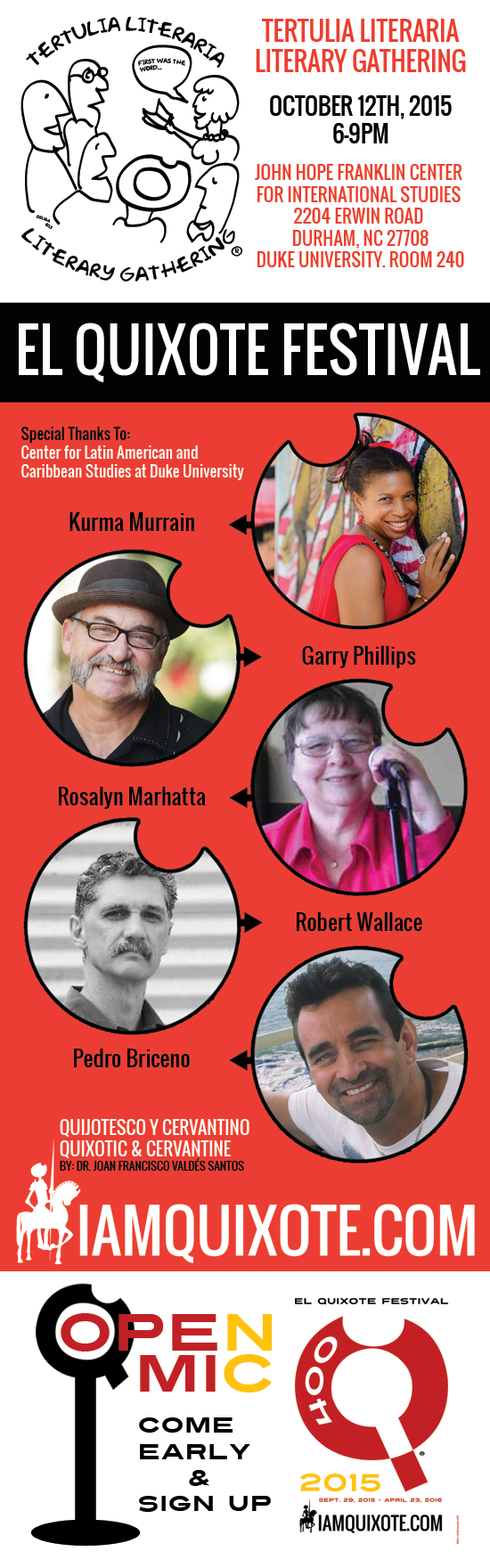
The First Literary Gathering is scheduled for Oct 12, 2015
(Discovery Day – Dia del Descubrimiento de America) – 6-9pm.
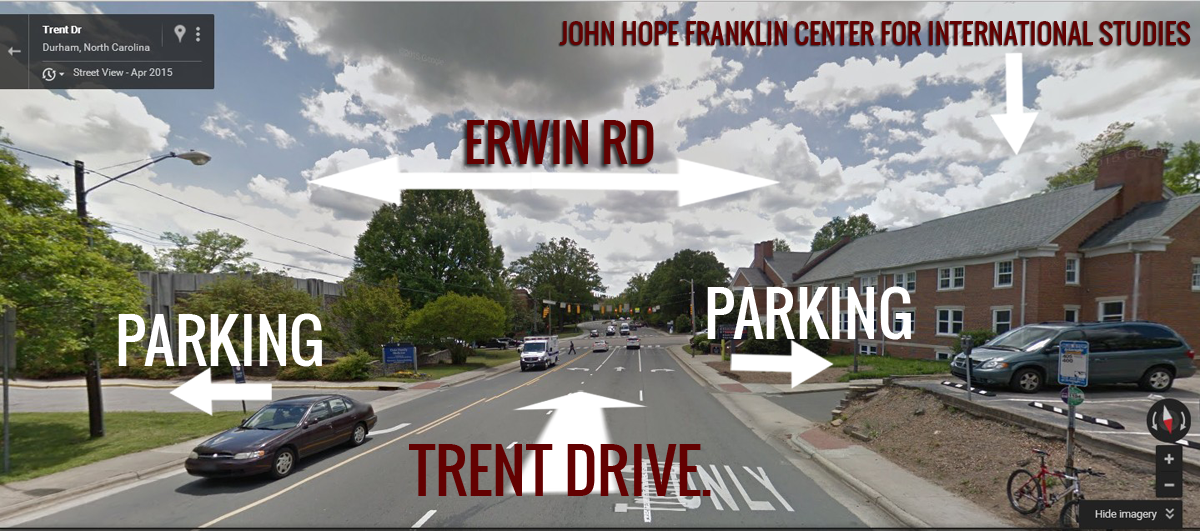
John Hope Franklin Center for International Studies.

​2204 Erwin Road Durham, NC 27708
Duke University. Room 240.

JOHN-HOPE-FRANKLIN-CENTER-FOR-INTERNATIONAL-STUDIES

THE FIRST LITERARY GATHERING IS SCHEDULED FOR OCT 12, 2015 Book Marker


TERTULIA LITERARIA - LITERARY GATHERING

  • Literary Gatherings
  • Featured Authors, Poets, Writers
  • Open Book Readings
  • Out loud readings at (Universities, Libraries, Café’s)
  • Open Mic
  • Book Signings

APPLY-TO-CALL-button-35  APLIQUE-AQUI


[contact-form-7 404 "Not Found"]


Learn More »

Art Exhibit I Am Quixote, Yo Soy Quijote

Art Exhibit I Am Quixote, Yo Soy Quijote

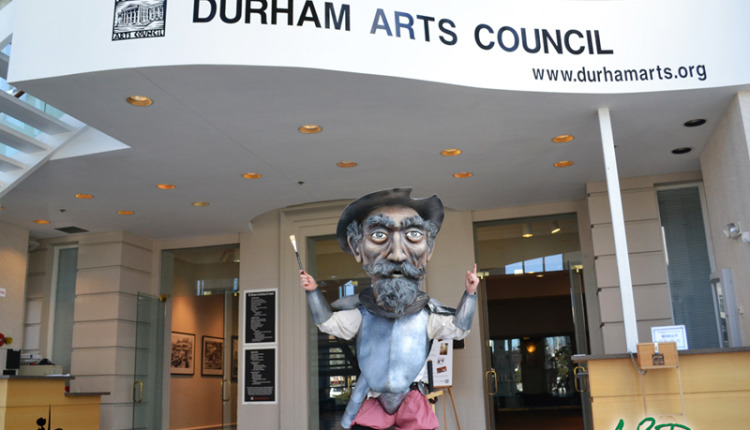
Artist Studio Project in collaboration with The Durham Arts Council presents: I Am Quixote, Yo Soy Quijote

OPENING RECEPTION: NOVEMBER 12, 2015 – 7:00 PM – FREE ALL ARE WELCOME

ARTIST ROUND TABLE – NOVEMBER 19, 2015 – 7:00 PM – FREE ALL ARE WELCOME

120 Morris St. Durham NC 27701 – (919) 995-9763
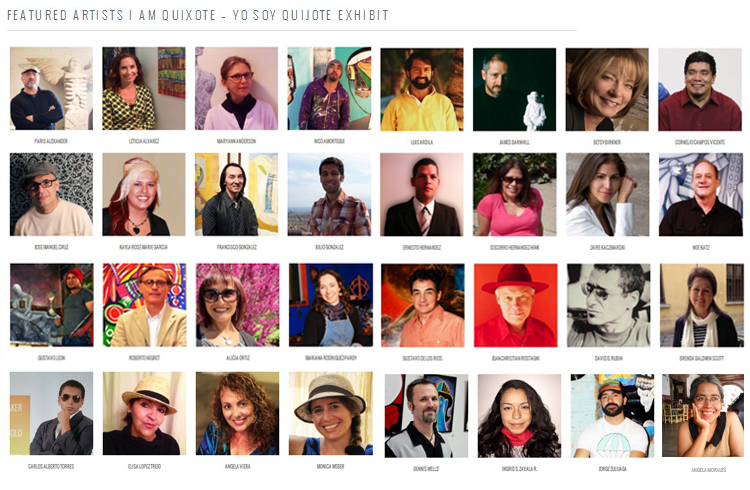
click on the image below to learn more about each artist.

Featured-Artists-I-AM-QUIXOTE

I AM QUIXOTE – YO SOY QUIJOTE

Read - Phantoms and Embodiments: El Quixote a time traveler.
Read – Phantoms and Embodiments: El Quixote a time traveler.

This multi-media selection of works by 32 artists from across North Carolina explores themes from Don Quixote De La Mancha.

Open Reception at Durham Arts Council
“ALLENTON AND SEMANS GALLERIES” on November 12, 2015, 7:00 PM – 
120 MORRIS ST. DURHAM NC,  27701 UNITED STATES

The Durham Arts Council’s mission is to promote excellence in and access to the creation, experience, and active support of the arts for all people of our community and is delighted to have the opportunity to work with the Artist Studio Project to present such inspiring, visual responses to the universal story and spirit of Cervantes’ Don Quixote.

I Am Quixote – Yo Soy Quijote features painting, drawings, sculpture, photography, mixed media, mosaics, and software-generated work.

Featured Artists - I Am Quixote - Yo Soy Quijote Exhibit

Phantoms and Embodiments -El Quixote a time traveler

The exhibit forms part of the El Quixote Festival a seven month long festival celebrating the 400 year anniversary of
“El Quijote” a Spanish novel by Miguel de Cervantes Saavedra two parts. “El ingenioso hidalgo don Quijote de la Mancha” 1605, “El ingenioso caballero don Quijote de la Mancha”1615


The State Of Things - El Quixote Festival

Artistic director Rafael Osuba with artists Betsy Birker and Jean-Christian Rostagni give us a preview of the ‘I Am Quixote’ exhibit currently on view at the Durham Arts Council through January 3, 2016


Highlights of the Opening Reception November 12th, 2015 – Durham Arts Council


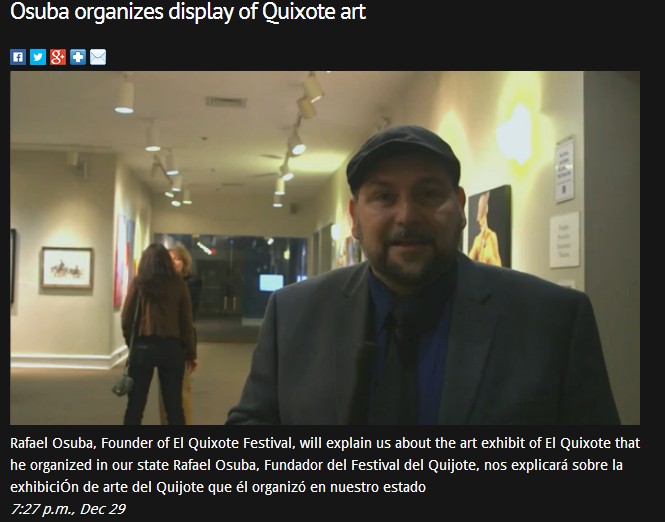
HOLA NC Interview: Osuba organizes display of Quixote art

Osuba organizes display of Quixote art

Rafael Osuba, Fundador del Festival del Quijote, nos explicará sobre la exhibición de arte del Quijote que él organizó en nuestro estado


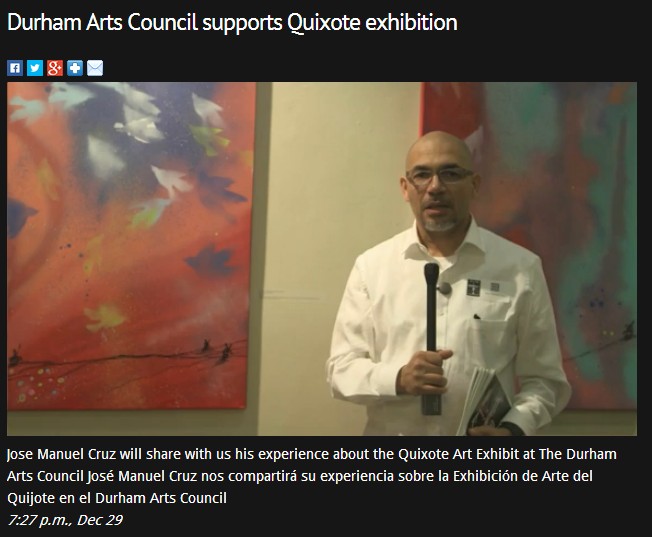
Jose Manuel Cruz

Jose Manuel Cruz will share with us his experience about the Quixote Art Exhibit at The Durham Arts Council José Manuel Cruz nos compartirá su experiencia sobre la Exhibición de Arte del Quijote en el Durham Arts Council


Artist Studio Project in Collaboration with Durham Arts Council Presents: I AM QUIXOTE - YOU SOY QUIJOTE ART EXHIBIT COMING NOV 6TH 2015 - JAN 3, 2016Celebrate 400 years of Don Quixote with
Historic Art Exhibit I Am Quixote, Yo Soy Quijote.

NOVEMBER 6, 2015 – JANUARY 3, 2016

Don Quijote De La Mancha, Don Quixote De La Mancha

The exhibit will take place at the “Allenton and Semans Galleries”  Durham Arts Council in Durham NC.

OPENING RECEPTION: NOVEMBER 12, 2015 – 7:00 PM – FREE ALL ARE WELCOME

ARTIST ROUND TABLE – NOVEMBER 19, 2015 – 7:00 PM – FREE ALL ARE WELCOME

When
November 6th, 2015 9:00 AM   through   January 3rd, 2016 9:00 PM
Location
120 Morris St. Durham NC,  27701 United States
Contact: Rafael A. Osuba
Phone: 919-995-9763
Email: Rafael.Osuba@gmail.com

About The El Quixote Festival:

The Festival’s initial intention is to celebrate the 400th anniversary and closing of Miguel De Cervantes Saavedra’s two books simply known now as “El Quijote”, while placing a special emphasis on artistic creations in the Spanish language.  Genres such as visual arts, literature, opera, music, dance, theatre, film and gastronomy along with various academic events are programmed.
Additional goals are to broaden the artistic landscape in North Carolina, reach new and more diverse audiences and to build relationships, share knowledge, learn and build consensus.

About Artist Studio Project:

Artist Studio Project: Is a collaboration of artists working to help promote each other’s talents and art through various media forms. Artist Studio Project will team up artists on an intellectual endeavor that is creative in nature and by doing so give them a platform to create by sharing knowledge, learning and building consensus. It is our belief that in particular, teams that work collaboratively can obtain greater resources, recognition and reward when facing competition for finite resources. ASP was created by Rafael A. Osuba who serves as its Artistic Director.

Artist Studio Project NC    Durham Arts Council    City of Durham

400 years of El Quixote with Historic Art Exhibit I Am Quixote, Yo Soy Quijote in Durham NC Don Quixote

Art Exhibit I Am Quixote, Yo Soy Quijote


Learn More »